


01 Manage
Managed
Scope what AI can read, call, and change by role and workspace.
PermissionsTool access
Your context, your governance, your data with apps and agents on top.Owned by you, live in hours.

One connected system which works with your team and learns and grows with them.
Feed
Files, tools, and actions are managed, monitored, and audited from one layer. Your AI only sees what it is cleared for, every connection can be controlled, and every action leaves a trail.
Live governance path
LiveIncoming action
Work request
read, write, or tool call
Every action passes through the same layer before it reaches files, tools, apps, or records.
Files
read and write scoped context
Tools
controlled external calls
Apps
approved workspace actions
Audit
complete action history
Scope what AI can read, call, and change by role and workspace.
See tool usage, blocked actions, and unusual patterns as they happen.
Trace reads, writes, tool calls, and outcomes from one trail.
Zaro governs where work happens: the files your AI reads, the tools it calls, and the outputs it writes.
Context, agents, and apps share one memory. Nothing resets between runs. The system compounds instead of starting from zero every time.
Every document, call, decision, and ticket in a single versioned workspace. Usable by apps and agents. Searchable. Permissioned. Owned by you.
Any model, any framework. Each run reads from your context and writes back to it. Every run makes the next one smarter.
Describe what you need. Zaro builds it: a dashboard, a pipeline tracker, a morning briefing. Connected to your data, updated automatically as you work.
Four things you do with Zaro - and each one makes the next smarter.


Each workspace defines a siloed set of data - company-wide, per team, or per use case.
Files, calls, CRM records, Slack threads, specifications. Everything your team already produces, in one place. You do not change how your team works.


Hey @Zaro, did the team agree on a price and date for the contract renewal?
Schedule them, trigger them, or run them on demand. Each one reads from your workspace and writes back to it. Open connections keep the architecture yours, with no vendor lock-in.
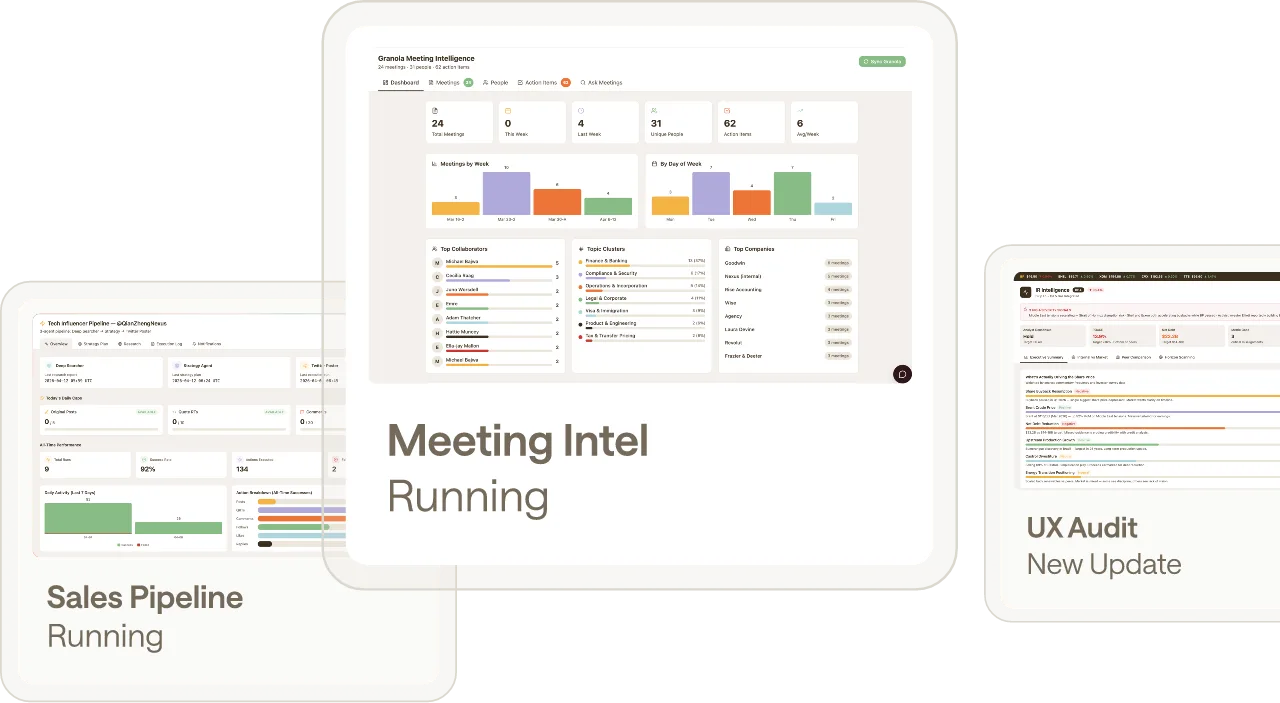
Describe it. Your workspace builds it: a live dashboard, an automated morning briefing, a status tracker that updates itself. No template. No per-seat licence for a feature you will never configure.

Context belongs to the tool. It resets with every session and is invisible to every other agent you run.
Every agent run enriches the same workspace. Your context compounds instead of resetting.
Every interaction builds intelligence inside the vendor's platform. The more you use it, the harder it is to leave.
Every interaction builds intelligence inside your workspace. Portable, versioned, vendor-neutral. It belongs to your company.
A dashboard disconnected from your data. You maintain it manually. It goes stale the moment something changes.
Your application connected to your workspace, updated automatically as your data changes.
Your agents run on one model. When that model goes down, your workflows stop, your automations fail, and your team waits.
If one model goes down, your agents do not. Proprietary routing switches automatically so your operations never stop.
Fifteen tools. Fifteen logins. Fifteen subscriptions. And frontier model pricing on every task, however routine.
Proprietary routing runs cost-efficient models routinely and frontier models when needed, about 10x cheaper.
Most platforms are built to keep it. Zaro is built so it stays yours - secured, audited, and versioned from day one.


