Five Hundred Licences. Almost No One Uses Them.
Stop us if this sounds familiar. Procurement approves the rollout. Licences go out to everyone. Three months later, a handful of people use it daily, most people opened it once, and finance is asking why the bill keeps climbing while usage keeps falling.
Read that two ways and you get two different stories. Glass half full: hundreds of people picked up a brand-new tool inside a single quarter, faster than most companies ever roll out new software. Glass half empty: after three months, most of those same people have quietly stopped opening it. Both readings are true at once, and the gap between them is the only number in the whole rollout worth caring about.
We stopped calling this a rollout problem a while ago. The tool did exactly what it was built to do. What broke down was the assumption that change management and training could stand in for infrastructure the business never built. Give that same rollout the best trainers and most patient change managers in the world, and the best-trained user still opens a blank session every morning, re-explaining what the team already knows. Training makes someone skilled at using the tool. It does nothing about the tool forgetting them between sessions. No amount of user skill fixes that.
The Individual Tool, Doing Its Job
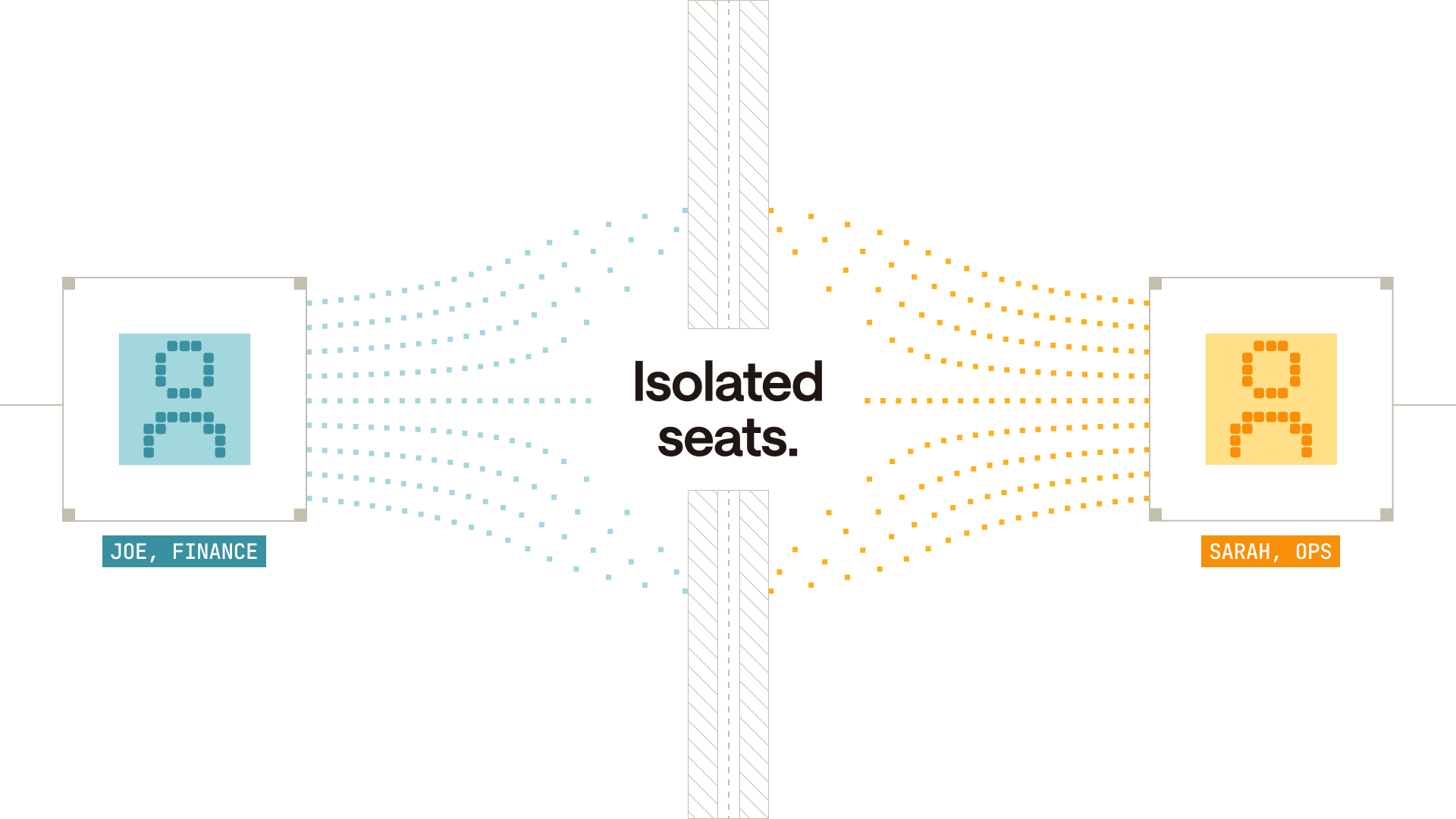
Every AI assistant on the market today is built around one person, sitting at one screen, asking one question at a time. That's the design working exactly as intended. The tool learns what one person tends to ask, remembers what that person corrected last time, and gets faster for that person specifically.
The trouble starts the moment you buy five hundred of them.
Because the context never leaves the individual. What the assistant learns from someone in finance never reaches someone in operations asking almost the exact same question three weeks later. Every seat starts from zero. Every correction anyone makes disappears into that one person's session and nowhere else. What actually went out the door was five hundred separate systems wearing one name, each starting from nothing, each learning nothing from the other four hundred and ninety-nine.
That's the whole story of the usage graph everyone's staring at in these rollouts. It shows five hundred people each discovering, on their own, at their own pace, whether the tool was worth their time. Most of them decided it wasn't, because it never got any smarter no matter how long they used it.
Three Ways the Cost Shows Up
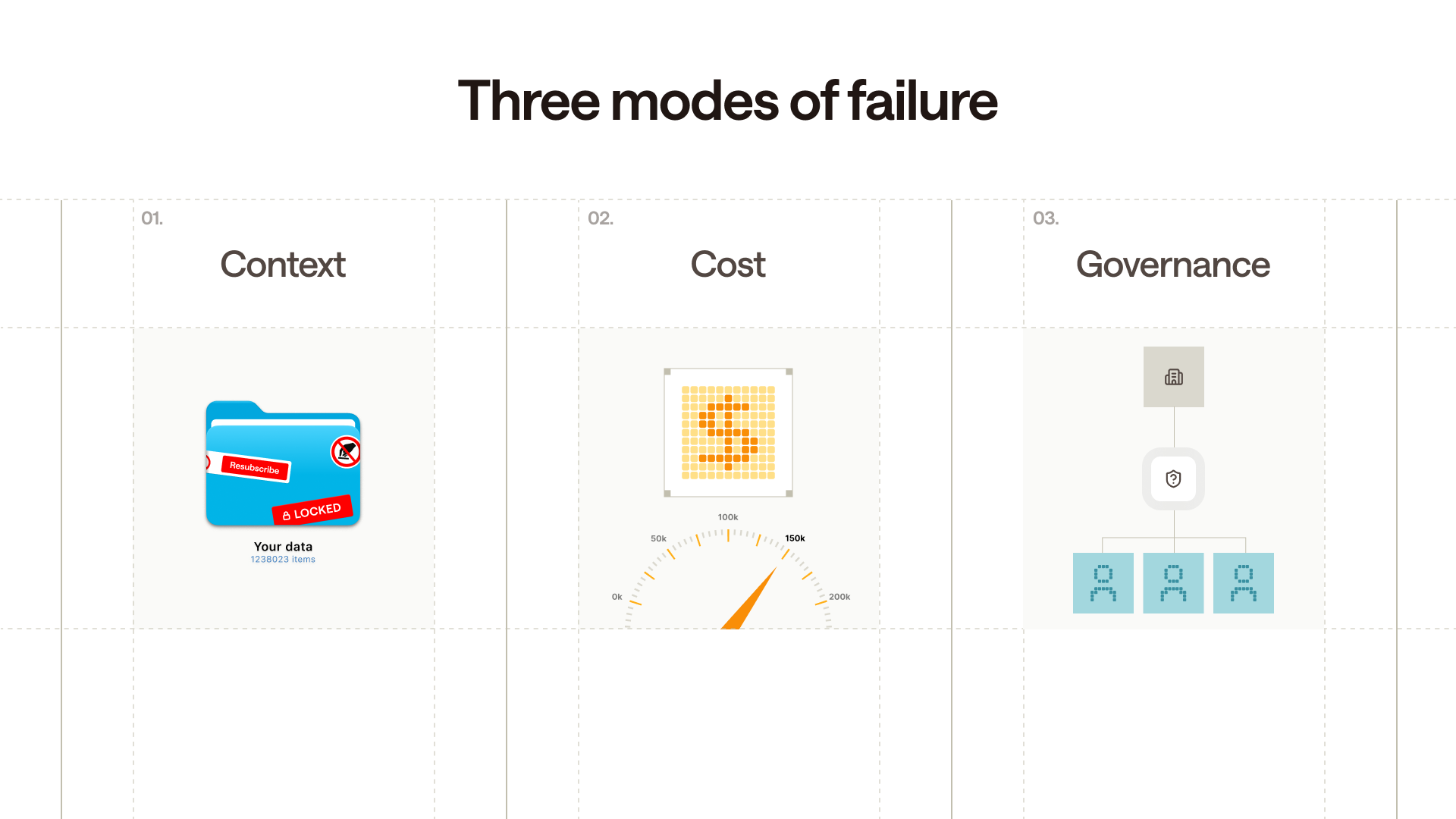
Once you're past a hundred seats, the same three problems show up in the deployments we've seen, regardless of industry.
The first is context. It stays wherever it was created and nowhere else. A pattern one team spent weeks figuring out is invisible to the next team asking the same question. You've paid for the same discovery process to happen over and over, once per person, forever.
The second is cost. When every query runs through the most capable model available because there's no system underneath deciding what actually needs that much power, a simple lookup burns the same budget as a genuinely hard problem. Nobody's watching that gap because nobody built anything to watch it. It just shows up on the invoice.
The third is governance, and this is the one that quietly kills confidence in the whole rollout. Who has access to what? What was the assistant actually shown before it gave that answer? Which version of a document did it use? With five hundred separate sessions and no shared record between them, those questions have no answer at all. And a business that can't answer "what did the AI actually see" stops trusting what the AI tells it.
This is just what individual tools reliably do once you scale them past the point where one person's session is the whole story. Nobody rolled this out badly. Any tool built for one person hits a wall at five hundred seats.
Even the Good Ones Plateau Here
The usual story told about a rollout like this is a product story: the tool was too basic, the wrong assistant got chosen, a better one would have stuck. That story gets the cause and effect backwards. The product was built to solve a problem one person has. It got deployed against a problem an entire organisation has, and no version of that product, however good, was ever going to close that gap on its own.
At least one well-known challenger in this market has already tested that theory at scale. It built a genuinely secure, properly governed chat product for business. It answered the real fear enterprises had about staff pasting company data into a personal account somewhere, and grew fast on the back of that fear, into the tens of millions in annual revenue, inside not much more than a year and a half. Good execution, real demand, a real answer to a real fear.
Underneath all of that growth, the product is chat: a very good, very well governed version of it. Workflows added on top make the chat window more useful, without giving the organisation anywhere for what it learns to live once the conversation ends. The next person still starts from nothing. Every chat-first tool eventually hits this same ceiling, no matter how well it's built or how quickly it grows.
What Actually Changes the Graph
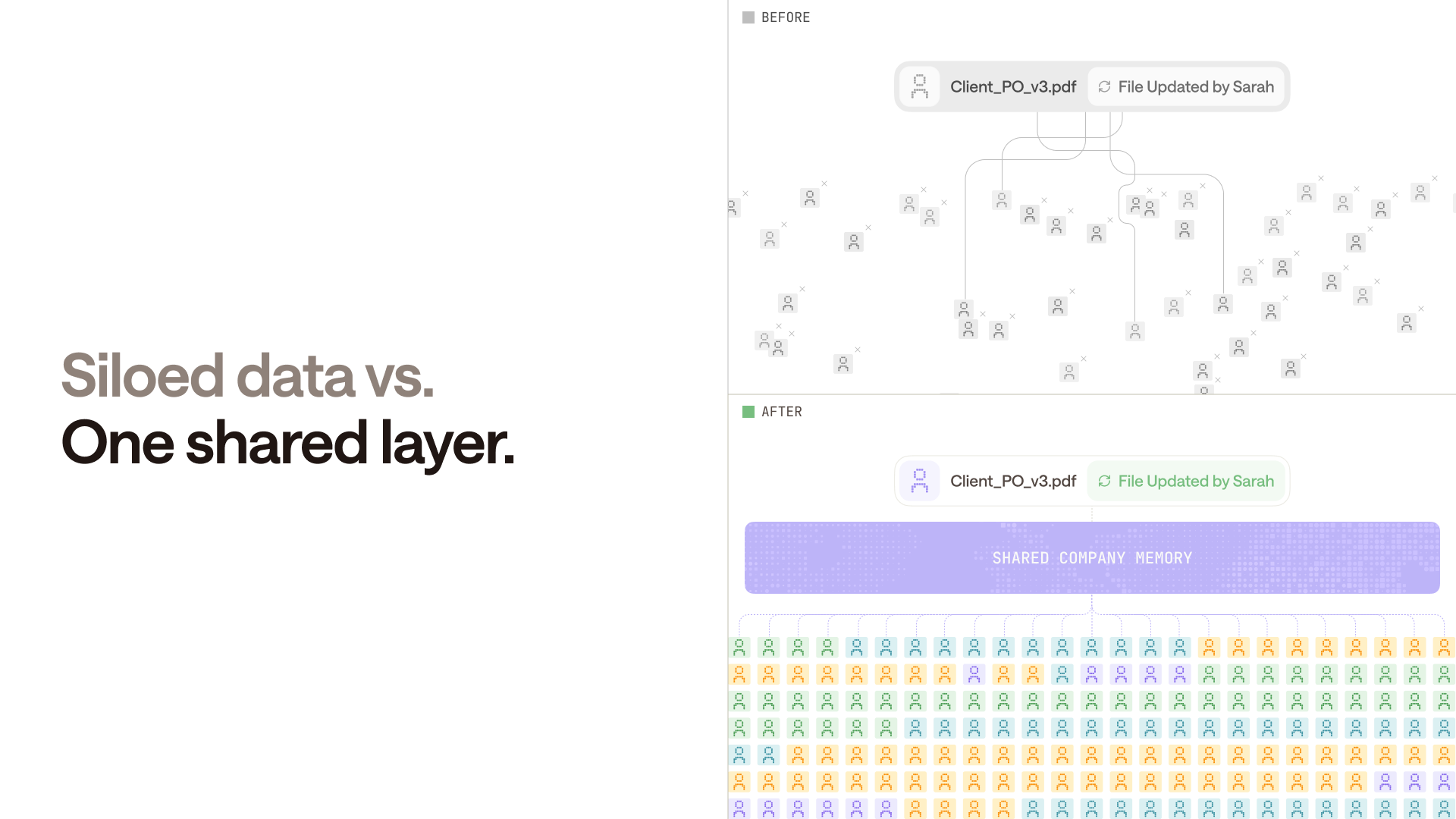
The fix is somewhere for what the assistant learns to actually live, so it doesn't have to relearn the same thing five hundred times over.
A shared context layer sits beneath every session rather than inside each one. When someone in operations corrects a figure, that correction remains the next time anyone on any team asks a related question. The system remembers on behalf of the whole organisation, and every person using it benefits from every correction anyone else has ever made.
Route the easy questions to cheap models and the hard ones to the expensive ones, automatically, based on what's actually being asked rather than habit. The invoice starts reflecting the work being done instead of a flat tax on every query, regardless of difficulty.
And permission and provenance live in the layer itself rather than in five hundred separate memories nobody can audit. What was the assistant shown? Who's allowed to see it? Which document did that answer actually come from? Those become answerable questions again, because there's one place to ask them.
Picture the same rollout again, but with one shared memory sitting underneath all five hundred seats instead of five hundred separate ones. Someone in operations asks: "Which supplier contracts are up for renewal in the next quarter, and which ones changed terms last time?" The answer comes back sourced from the contracts folder, the renewal emails, and last quarter's notes, each line traceable to where it came from. Three weeks later, someone in a different office asks a related question about a different supplier. The system already knows how this company likes contract questions answered, because it learned that the first time, for everyone, not just the person who asked it first. That's the difference between a tool that resets and one that compounds.
The Graph That Should Worry You
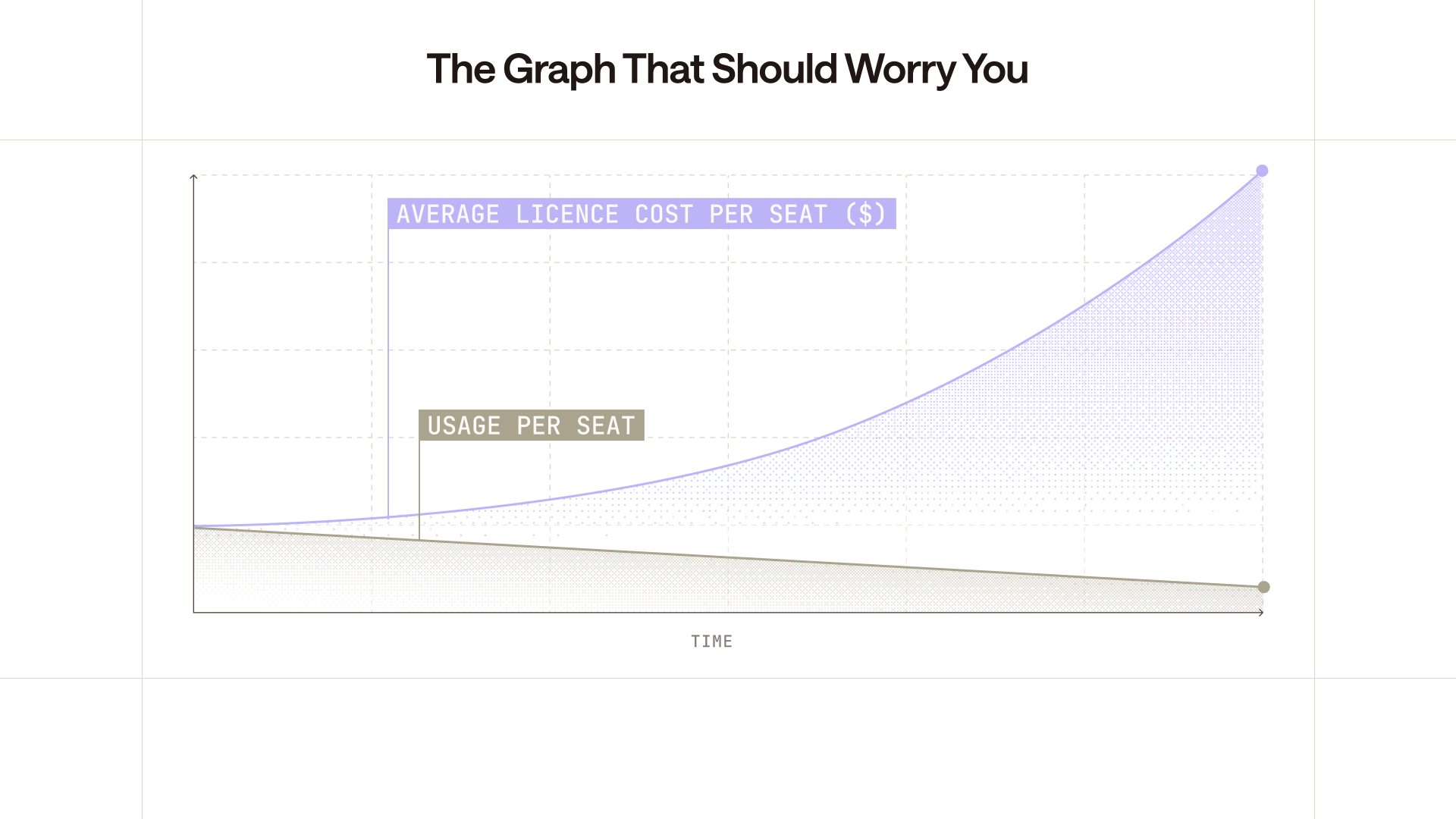
The number worth watching in any rollout is usage per seat, climbing or flat, six months in. Flat means every person is still starting from zero, every single time. Climbing means the system underneath is doing what it's supposed to: getting better with every question it's asked, for everyone, not just the person who asked it.
That's the whole difference between a tool that plateaus at "impressive in the room" and one that's still worth what you paid for it a year later.