Agentic Software: When Your Tools Start Working With You
The assumption nobody questions
There's a quiet assumption buried in almost every conversation about software: that a tool is something you operate. You open it, you click through it, you type into it - and when you walk away, it sits still until you come back. The software waits. You do the work.
We've lived with this assumption for so long that it stopped looking like a choice. It looks like the nature of software itself.
It isn't. It's a limitation we inherited - and it's quietly ending.
Two worlds that never quite met
Think about the two kinds of intelligence that touch your company's information every day.
There are the people - reading, writing, deciding, noticing the one thing that doesn't add up. And increasingly, there are agents - software that can research, summarise, draft, and act on your behalf.
Here's the catch: until now, these two have never truly worked on the same information at the same time. People work inside apps. Agents work off to the side - handed a copy, asked to produce something, then sent away. The app is the source of truth for the person. The agent is a visitor who never gets to stay.
The result is software an agent might help build once - not software an agent actually lives inside. We got "AI that makes things for you." We never got software where people and intelligence operate as peers on the same shared reality.
Not because no one imagined it. Because the foundations weren't there.
The shift: software that works alongside you
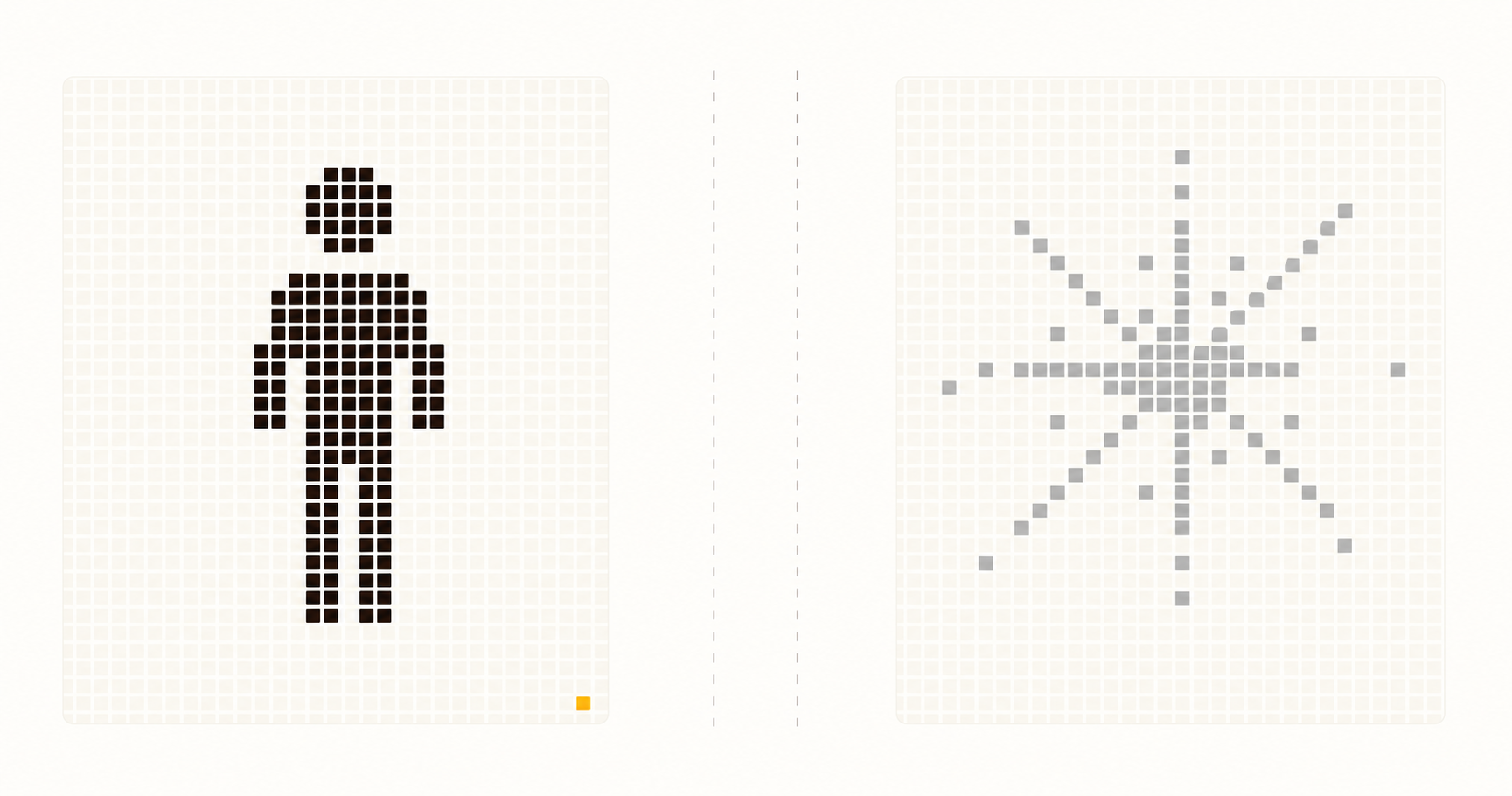
Zaro is built on a different foundation - one where people and agents finally share the same source of truth, each working in the way that's natural to them.
The effect is easy to feel, even if the work behind it is not. When a person makes a change, the agent sees it instantly. When the agent does something, the person sees it in the app. No exporting. No syncing. No stale copies drifting apart. One shared reality, two kinds of intelligence working on it together.
We call the result agentic software: not software an agent built, but software an agent inhabits.
The difference is everything.
What software starts to do on its own
Once an agent can live inside your tools instead of visiting them, the software stops being passive. It starts to:
- Enrich - quietly fill in the context you'd otherwise gather by hand: researching a new lead, adding the detail that makes a record complete.
- Validate - watch for the gaps and inconsistencies that creep into any system, and fix them before they become a problem.
- Act - notice when something crosses a threshold and respond: send the note, draft the follow-up, kick off the next step.
- Evolve - recognise when your needs have changed and reshape the tool to match, instead of waiting for someone else's roadmap.
And the part that matters most: you see everything it does, and it sees everything you do. Nothing happens behind a curtain. You're not handing work to a black box - you're working next to something that shares your view of the world.
This isn't a faster version of the software you already have. It's a different category - the difference between a tool you use and a teammate that works with you.
What it looks like: a launch that runs itself
Abstractions are easy to nod along to, so here's a concrete one - a marketing team running a product launch.
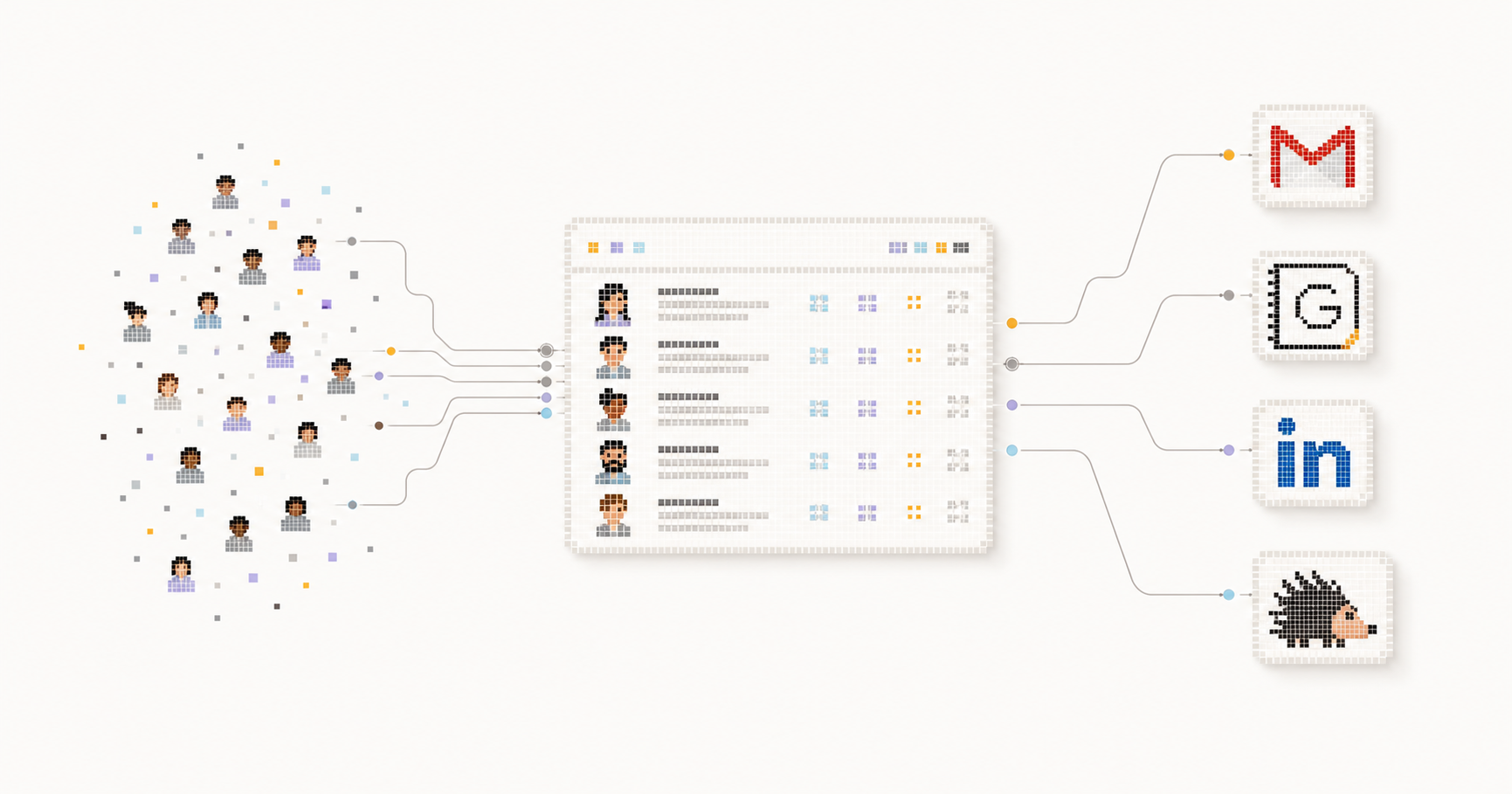
It starts with the question every launch team asks: who actually showed up? An agent connected to the team's product analytics watches who visits the site. For each promising visitor, it takes their work email and runs a deep research pass - building a profile, judging how well they fit the team's ideal customer, and writing up what it found in a clear report.
That research doesn't disappear into a document nobody reopens. It flows into a custom app the team built for exactly this: an ICP board that surfaces not just everyone who stopped by, but the ones worth attention - each with the agent's report attached.
When someone on the team decides a prospect is worth pursuing, the board is connected to their email - so a tailored outreach goes out with a single action, and the prospect moves toward a discovery call.
From there the loop keeps closing on its own. An agent sits in on the calls, captures each summary, and drops it straight back into the same ICP board - so the notes live next to the person they're about, not buried in yet another tool. Because the board is also connected to the team's calendar, it knows when the next meeting is. And one click prepares the team for it, with the agent pulling together everything it already knows about that account.
No one stitched these steps together by hand. Nothing was exported, re-keyed, or copied between five different tools. The visitor signals, the research, the outreach, the call notes, the calendar - all of it lives on one shared ground, with people and agents working it together.
That's what go-to-market at AI speed actually feels like: not a person babysitting a stack of disconnected apps, but a team and its software moving as one.
Why this never existed before
Software that people and agents can truly share has needed three things to be true at the same time:
- A shared foundation both people and agents can work on directly - with nothing translating, copying, or syncing between them.
- Intelligence that understands not just the contents of your information, but its shape - so it knows when something fundamental has changed.
- Tools that can rebuild themselves to match that change, rather than simply re-displaying yesterday's layout.
For a long time, the first one alone was out of reach. People and agents were always separated by a layer of plumbing in the middle, and the agent was always the outsider. Zaro removes that separation. That's the unlock: the barrier that kept agentic software from existing is simply gone.
Why it takes infrastructure of its own
Here's the part that's easy to miss: you can't simply add agents to the software you already have. Agentic software isn't a feature you switch on - it's a property of the ground it stands on. And almost nothing in use today was built on the right ground.
Traditional software was built for one kind of operator: a person, clicking through an interface, making one change at a time. Everything underneath - how information is stored, how it's searched, how changes are recorded - quietly assumes that. The moment you ask an agent to work the same information continuously, in the background, as a peer, that foundation strains and cracks.
Zaro was built the other way around, and it comes down to the data layer. In most software, your information sits locked behind a database that only the app knows how to speak to - the agent stays on the outside, handed copies through a narrow pipe. Zaro runs on a different kind of data layer: one that people and agents work on directly, at the same time, on the very same information, with nothing translating in between.
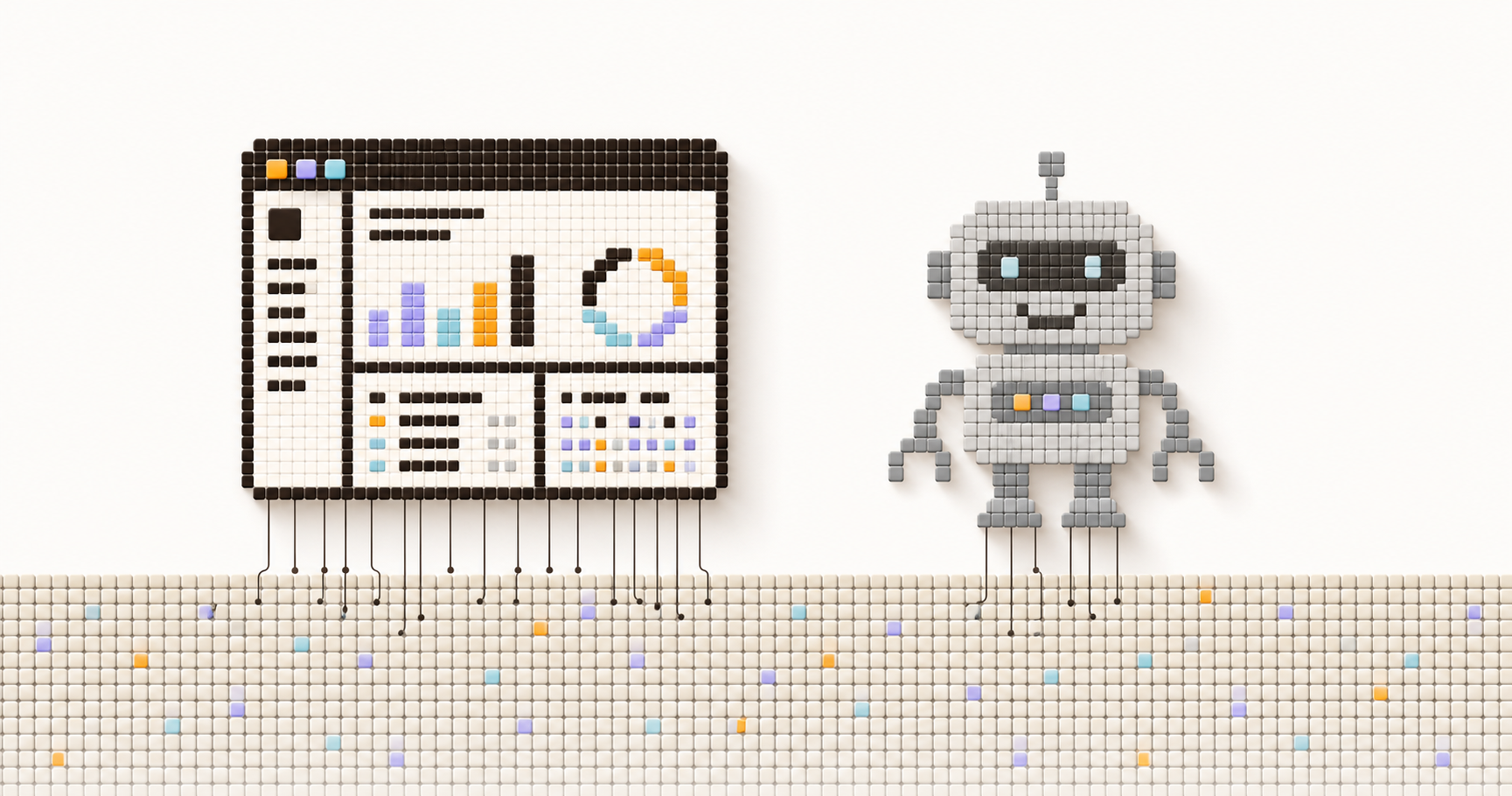
It's an unusual foundation - and almost everything that makes agentic software trustworthy, not just impressive, falls out of that one decision:
- Perfect memory. Every change - whether a person made it or an agent did - is remembered. You can always see who changed what and when, and return to exactly how things looked at any earlier moment. This is what lets a company hand real work to an agent and still answer, with proof, "what did it do, and to what?"
- Answers it can trust. When an agent looks something up, it finds it with certainty - the same result every time, not a confident guess that's right most days. Something acting on your behalf has to be exactly right, and the foundation makes that the default rather than the hope.
- Change as a signal. A change isn't just quietly saved - it's an event the rest of the system can respond to. The instant something important happens, the next step can fire on its own. The software doesn't wait to be asked.
- One shared ground, no copies. People and agents touch the same source of truth directly. There's no layer in the middle translating between them, nothing to fall out of sync, no stale copy drifting away from reality.
None of this can be bolted on after the fact. It's why agentic software hasn't just appeared as an upgrade to the tools you already use - and why it took building the foundation over again, for two kinds of operator instead of one.
That foundation is the real product. The tools that run on top of it are simply what it looks like from the outside.
Every team gets tools shaped around them
This shift changes more than how software behaves. It changes who software is built for.
Traditional software is built for the average customer. Someone, somewhere, guessed how companies like yours work and shipped a fixed template. Your team bends to fit it. You use a fraction of the features and carry the rest as overhead - setup, training, things no one ever touches.
When software can be shaped around your context and kept alive by an agent, that inverts:
- The operations team describes how they actually onboard people. A tool appears with exactly the fields they need - no more, no less.
- The legal team describes their contract review. A tool appears that matches their stages, their stakeholders, their deadlines.
- Marketing describes how they track campaigns. A tool appears built around their reporting, not a generic template.
None of these existed before. None required a vendor to decide what mattered. And because an agent lives inside each one - enriching, checking, adapting - they don't go stale. They get more useful over time.
That's the end state: one platform, a handful of tools that are exactly what each team needs, each getting a little smarter every day - not because someone maintains them, but because standing still is no longer how the software works.
This isn't better SaaS
It's tempting to file this under "the software you already have, with AI bolted on." It isn't.
The traditional model rests on one idea: that software is a product you buy, shaped around a vendor's assumptions, used through a vendor's interface, and improved on a vendor's schedule.
| Traditional software | Agentic software | |
|---|---|---|
| Who operates it | People only | People and agents, together |
| Source of truth | A copy per tool, kept in sync | One shared reality |
| When you step away | It sits still | It keeps working - enriching, checking, acting |
| Fixing data issues | You notice, you fix | Caught and corrected continuously |
| When your needs change | Wait for a vendor update | The tool reshapes itself |
| Who it's built for | The average customer | Your team, specifically |
Agentic software implies something else entirely: that software is a living system - shaped around your team, operated by people and agents together, and evolving continuously as your organisation learns.
When every team can have custom, living tools that work alongside them on a single platform, the whole idea of buying predefined software from a vendor starts to look like a relic.
You don't need better SaaS. You need software that was never SaaS to begin with.